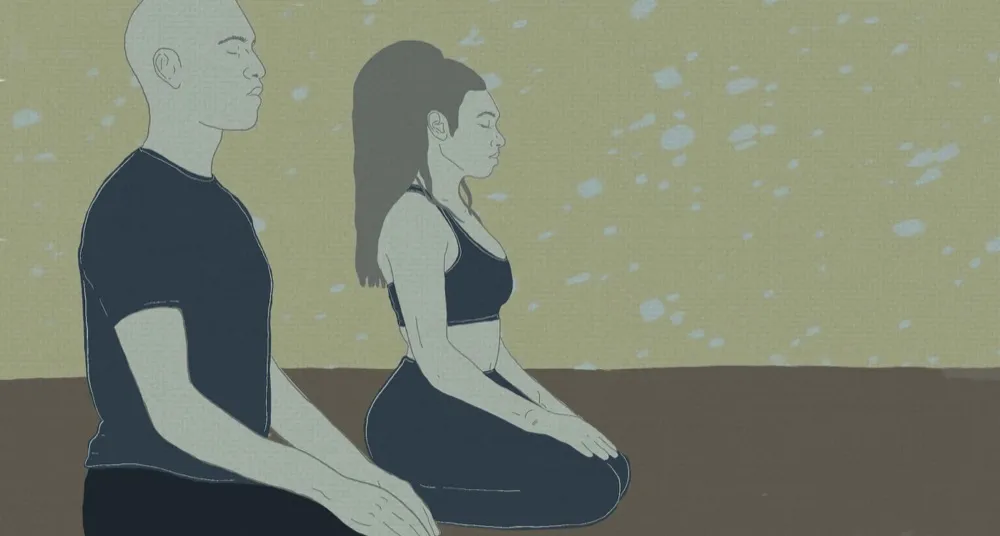
Yoga is practiced throughout the world to increase flexibility, improve strength and provide mental clarity. In fact, about 36 million people practice yoga in America alone (approximately 1 in 10), a number that has increased by 50% in the past four years. In addition to our physical health, yoga can also be beneficial for our mental health, and many certified professionals work hard to help both individuals and groups improve any range of issues through its practice. A few examples might include specific struggles like addiction, post traumatic stress disorder, depression or anxiety, or more general issues like mood or focus.
How Yoga Benefits Our Mental Health
Yoga has many advantages. It would be difficult to list them all here, so let's focus on yoga from a mental health perspective:
- Yoga helps improve self-compassion, mindfulness and the mind-body connection.
- It helps us learn how to regulate our breath, and in turn our central nervous system.
- During our lives that are often hectic, in a society where rushing from one thing to the next is the norm, yoga helps us find time to slow down.
- Yoga is not about making your body look a certain way or achieving the same position as someone else, but simply going at a pace that feels comfortable, allowing each person to connect with their breath.
Above all, yoga for mental health is not about the complexity of flows or pushing your body, but about feeling safe and accepted, gently teaching our minds to focus, gaining insight about ourselves and learning to regulate our emotions and bodily responses.
Trauma-Informed Yoga
Yoga can be especially beneficial for those affected by trauma. Trauma-informed yoga can help soothe the central nervous system and regulate the flight or fight response, which in turn helps the client learn to anchor their body and build new pathways in the brain, helping to re-pattern the way the body responds to present or residual trauma.
Practicing Yoga for Mental Health with a Professional
A qualified yoga therapist must complete a 200-hour training certificate in teaching before embarking on additional certifications. A Certified Yoga Therapist (C-IAYT), for instance, is trained by the International Association of Yoga Therapy in mental health, trauma and healing work to contribute professionally in integrative health care environments. One might enlist the help of a yoga therapist individually, or participate in yoga therapy as part of residential or outpatient treatment programs.
How might yoga with a certified mental health professional differ from a more general yoga class? Trauma-informed yoga, for example, is based on a particular understanding of trauma that emphasizes its impact on the entire mind-body system. "Trauma," Bessel van der Kolk explains, "is not just an event that took place sometime in the past; it is also the imprint left by that experience on the mind, brain and body." Therapists draw from research and experience in developmental psychology, neuroscience and more to determine how the body responds to different types of trauma and stress, curating each class to help aid and regulate the central nervous system.
The goal is to provide a safe space to focus on the inner workings of the mind and body to inform decision-making, strengthening body awareness and fostering a sense of agency (which is often negatively affected by trauma). Each class may focus on centering the mind through breath work, incorporating certain poses that help anchor the body, and helping the client build an inner reliance to meet the challenges they may face on the journey towards healing.
In order to create a safe environment for students, the structure of a trauma-informed yoga class may be inherently predictable, and purposefully so. Instructors try to show up in the same way, structure the class in the same way and create this container for "knowing," whereas with trauma, there is a great sense of unknowing and uncertainty about what's going to happen next. Language and cuing can also be extremely important. The client is always treated in a manner that is both supportive and encouraging.
Above all, yoga for mental health is not about the complexity of flows or pushing your body, but about feeling safe and accepted, gently teaching our minds to focus, gaining insight about ourselves and learning to regulate our emotions and bodily responses.
Rehashing the past is linked to depression; rehearsing the future is linked to anxiety. Holding a pose and focusing on our breath can help ground us in the present moment.
Practicing Yoga for Mental Health at Home
Though the help of a certified professional may be beneficial for many, you may still find improvement by practicing yoga at home. Here are a few tips:
- Don't be afraid to start. You don't have to practice every day, for an hour a day. Simply begin, and go for as long as you can, for as often as you can. 10 minutes is better than none.
- Focus on your breath. Deep, slow breathing helps our body slow down and focuses our mind, like a form of meditation. The more you practice, the easier it becomes to calm your body and focus your mind.
- During each session, give yourself permission to practice self-compassion. Listen to your body (What hurts? What feels good?) and notice your state of mind.
- Rehashing the past is linked to depression; rehearsing the future is linked to anxiety. Holding a pose and focusing on our breath can help ground us in the present moment.
- Let go of the expectations you have for yourself: what you think you should look like, what poses you should be able to do, how long you should be able to practice. Everyone's practice is different and their own.
- It may help at first to follow along with an instructor in-person or online, but as you learn, you may wish to tailor your practice to your own preferences, strengths and limitations. If something hurts, take a step back, or move on to something else. If your alignment is off, pushing yourself can do more harm than good.
- Yoga can also be a great way to shift your perspective. Try taking a few minutes to practice the next time you have a bad day and need a fresh outlook.
- "Yoga every day" doesn't mean we do it every day, just that we try. You have not failed if you need rest or have other responsibilities that may get in the way. Each moment of each day offers a new chance to slow down, reconnect and be good to yourself.
If you could use the support of a mental health professional, reach out to our care team in confidence. Ethos Wellness clinicians offer individual, group and family therapy, including our intensive outpatient programs, as well as HIPAA-compliant virtual appointments.