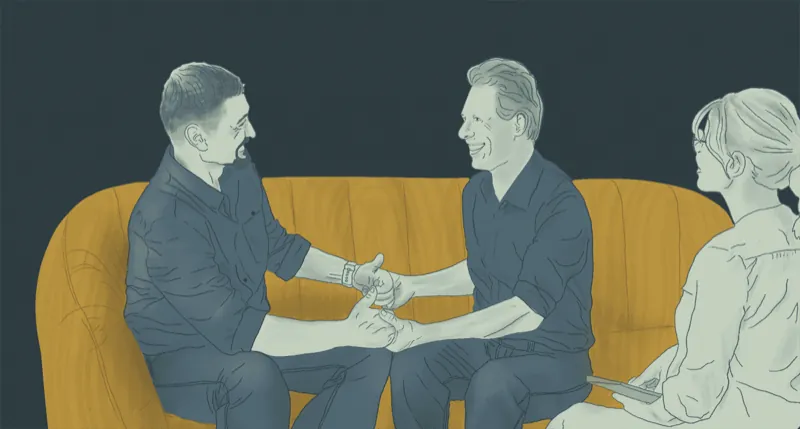
Group therapy is a type of psychotherapy where a trained clinician works with more than one individual, often between five and fifteen people at a time. A group meeting can last anywhere from an hour to an hour and a half, continue for a few weeks to a year or more, and the commonality can vary widely, from something broad like managing stress or loneliness, to something more specific.
At first, group therapy may seem inconvenient, impersonal or even daunting. We may think, "Why should I waste my time listening to other people's problems?" We may wonder, "Why do I need to attend a group on top of my individual appointments? I don't have that much time to spare." We may even say deep inside, "I'm too ashamed to share my problems with anyone else," and it's okay to feel this way.
However, there can be a huge amount to gain from group therapy. It is an integral part of many treatment programs for a reason, and many find that it improves their lives significantly; in fact, some even say it saved their lives.
Support
When you're dealing with something on your own, you may think you're the only one feeling the way you do. Hearing group members share in return helps us realize that there are others who have gone through the same thing in the past, or who are going through it right now along with you. They are there to support you and let you know that you're not alone.
Understanding
Groups give you the opportunity to speak openly and honestly about your feelings among others who understand. Sometimes, you may not feel comfortable sharing with those you're closest to; they may have trouble understanding or empathizing. In group therapy, it's often the case that the other members can relate. You can share with anonymity and without judgement. This is especially true in group therapy for adolescents, where peers face similar challenges.
Release
It's often said that a group is like a container; whatever you put into it, it can hold for you. Being able to verbalize certain thoughts and feelings can make them feel less powerful. It can be cathartic to release them into a safe space with no consequence or judgement.
Skills
Groups can also help improve certain important skills, like being able to cope with challenges, being able to open up about your emotions, the ability to make friends or the ability to speak in a group setting. At times, other members may share how they dealt with something, and it helps you figure out a solution to what you're going through. Other times, from an outside perspective, they may be able to see something in your situation that you're unable to see. These skills often complement what you work on in individual therapy and counseling.
Social Interaction
Whether we're isolated by our job or our nature, human beings still crave social interaction, and being able to find it in a safe space, among others who understand, is a great way to ensure these interactions are not only meaningful, but gainful and supportive.
If you're struggling to work through certain emotions or dealing with mental health issues, or if your doctor or therapist has recommended that you attend group therapy, it might be time to consider taking the leap.
At Ethos Wellness healing centers throughout Texas, we offer skills and support groups centered around a variety of different issues, emotions or skills. Our groups are facilitated by master's-level clinicians and offered both in-person and virtually. Learn more about adult group therapy or reach out to our care team to find the right fit.